Color Added Salmon — What That Label Actually Means
posted on
September 2, 2026
If you have ever flipped over a package of salmon at the grocery store and seen the words "color added," you have probably wondered what that means — and whether it is something to be concerned about. Here is the complete answer: what color added actually is, why it is on the label, what the FDA requires the label to say and what it does not have to disclose, and why wild-caught salmon never has this issue in the first place.

Quick Navigation
- What "Color Added" Actually Means on a Salmon Label
- Why Farmed Salmon Needs Added Color
- What Is Astaxanthin — and Is It Safe?
- Natural vs. Synthetic Astaxanthin — What the Label Does Not Tell You
- What the FDA Requires on the Label
- Why Wild-Caught Salmon Never Says "Color Added"
- What to Do With This Information
- Frequently Asked Questions
What "Color Added" Actually Means on a Salmon Label
"Color added" on a salmon package means the fish was fed a pigment called astaxanthin as part of its formulated diet — because without it, the flesh of farmed salmon would be gray rather than pink.
This is not a vague marketing disclosure. It is a specific FDA requirement. Federal regulations mandate that when salmon is fed astaxanthin to produce or enhance the color of its flesh, the label must disclose this fact using specific language. The disclosure can appear as "color added," "artificially colored," or a similar phrase depending on the source of the astaxanthin and how it was used. The requirement exists precisely because a reasonable consumer looking at a pink salmon fillet would assume the color reflects the fish's natural diet — and for farmed salmon, it does not.
Seeing "color added" on a salmon package tells you the fish was farmed. Wild-caught salmon does not require added color because it develops its pink-to-red color naturally from its diet in the ocean. If you are standing in a grocery store seafood case and a package says "color added," you are looking at farmed salmon, full stop.
Why Farmed Salmon Needs Added Color
To understand why farmed salmon needs added color, you need to understand why wild salmon is pink in the first place.
Wild salmon get their color from their diet. Krill, shrimp, and other crustaceans that wild salmon eat are rich in a carotenoid pigment called astaxanthin. As wild salmon consume these crustaceans over years of ocean life, astaxanthin accumulates in their flesh — producing the distinctive pink-to-deep-red color that varies by species. Sockeye salmon, which feed heavily on krill and shrimp, develop the deepest red color of any wild Pacific salmon species. The color is a direct, natural byproduct of living in the ocean and eating what the ocean provides.
Farmed salmon lives in net pens and eats formulated feed pellets. Those pellets are designed to deliver protein, fat, and calories efficiently — not to replicate the full nutritional complexity of what a salmon would eat in the wild. Krill and shrimp are expensive. Including them in commercial salmon feed at the levels required to produce natural color would significantly increase the cost of farmed salmon production.
Without dietary astaxanthin from natural sources, farmed salmon flesh is naturally grayish-white. That color is not appealing to consumers who expect salmon to be pink. So the industry adds astaxanthin directly to the feed — not because it improves the nutritional value of the fish for the consumer, but because it produces the expected color that makes farmed salmon marketable.
This is why the FDA requires the disclosure. The color of a salmon fillet is something a reasonable consumer uses to evaluate what they are buying. If that color is the result of a feed additive rather than the fish's natural diet, the consumer has a right to know.
What Is Astaxanthin — and Is It Safe?
Astaxanthin is a carotenoid — a naturally occurring pigment found in algae, yeast, and the crustaceans that eat them. It is the same compound that gives flamingos their pink color, shrimp their orange-red color, and wild salmon their characteristic flesh color. It is also a potent antioxidant that has been studied for its potential health benefits in human nutrition, though the research base for direct human supplementation is still developing.
The FDA has approved astaxanthin for use in salmon and trout feed since the 1970s. Food safety regulators in both the United States and Europe consider it safe at the levels used in commercial aquaculture feed. There is no documented evidence that consuming farmed salmon fed astaxanthin at commercial levels poses a health risk to humans. This is the straightforward part of the "color added" story.
The part that is less straightforward is where the astaxanthin comes from — and that is where the label runs out of information.
Natural vs. Synthetic Astaxanthin — What the Label Does Not Tell You
This is the most important gap in the "color added" disclosure — and it is the one most consumers do not know exists.
Astaxanthin used in salmon feed comes from two fundamentally different sources:
Natural astaxanthin is derived from algae, yeast, or other biological sources. It is the same compound wild salmon accumulate through their diet — just extracted and concentrated rather than consumed directly through the food chain. Natural astaxanthin production is more expensive than synthetic production.
Synthetic astaxanthin is produced through a petrochemical synthesis process. It is chemically similar to natural astaxanthin in its basic molecular structure but is produced from petroleum-derived compounds rather than biological sources. Synthetic astaxanthin is significantly less expensive to produce than natural astaxanthin and dominates commercial salmon feed production globally.
Here is the gap: the label says "color added." It does not say which kind. The same three words appear on a package whether the astaxanthin came from algae or from a petrochemical plant. The FDA disclosure requirement specifies that the coloring agent must be disclosed — not its source.
If this distinction matters to your household, the label will not answer it. Finding out requires either checking the specific brand's published sourcing documentation or asking the seafood counter directly. Most farmed salmon in American grocery stores uses synthetic astaxanthin — not because it is nutritionally superior, but because it is cheaper. Some premium farmed salmon operations use natural astaxanthin as a differentiator and will specify this on their packaging or sourcing pages. It is worth asking if it matters to you.
What the FDA Requires on the Salmon Label — and What It Does Not
Understanding what the FDA requires helps clarify both what you can trust on a salmon label and where the gaps are.
What is required:
Species name — legally required. "Atlantic salmon," "sockeye salmon," "coho salmon" must accurately identify the species in the package. Wild or farmed status — legally required. The label must specify whether the fish is wild-caught or farm-raised. Country of origin — legally required for most retail seafood. "Color added" disclosure — legally required when astaxanthin or other coloring agents are added to the feed to affect flesh color.
What is not required:
The source of the astaxanthin — natural or synthetic. The specific farm or fishery the fish came from. Antibiotic use during production. The specific feed composition used. Whether the farm is certified by a third-party sustainability program — and if so, which one and what it actually covers.
The label gives you the minimum legally required information. It does not give you the full picture. For a chain-by-chain breakdown of how 12 major grocery stores handle salmon sourcing — certifications, court records, and what their labels actually back up — read our grocery store salmon rankings post.
Why Wild-Caught Salmon Never Says "Color Added"
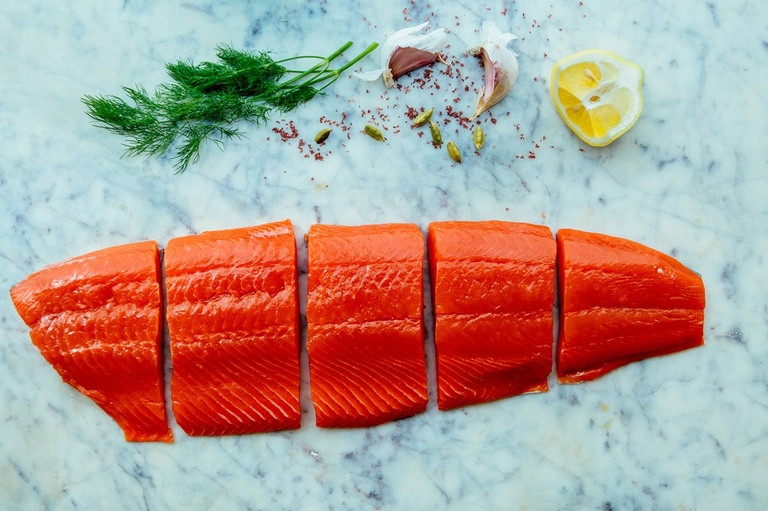
Wild-caught salmon does not require the "color added" disclosure because no color is added. The pink-to-red color of wild salmon is the direct result of years of eating a natural diet rich in astaxanthin-containing crustaceans. It is not a feed additive. It is not a production decision. It is simply what happens when a salmon lives in the ocean and eats what it is biologically designed to eat.
Sockeye salmon — the species Ferguson Farms carries — develops one of the deepest, most vivid red flesh colors of any wild Pacific salmon. That color is entirely natural, accumulated over the fish's lifetime in Bristol Bay, Alaska. No astaxanthin was added to feed. No color decision was made in a production facility. The fish is red because it ate what wild sockeye eat.
This is not a minor aesthetic distinction. The color of wild-caught salmon is a visible indicator of the fish's diet and life history — the same life history that produces its omega-3 fatty acid profile, its lean body composition, and its flavor. When you see "color added" on a salmon package, you are seeing a disclosure about a fish whose color had to be engineered because its diet and life history did not produce it naturally.
For a full comparison of how wild-caught and farmed salmon differ across nutrition, antibiotic use, environmental impact, and sourcing, read our complete guide on wild-caught vs. farmed salmon.
What to Do With This Information
If you see "color added" on a salmon package, you are looking at farmed salmon. That does not automatically make it a bad purchase — farmed salmon from well-sourced operations is safe to eat and nutritionally meaningful. But it does tell you something about how the fish was raised and what went into producing the color you are looking at.
If the source of the astaxanthin matters to you — natural versus synthetic — the label will not tell you. Check the brand's published sourcing documentation or ask the seafood counter. Most farmed salmon in American grocery stores uses synthetic astaxanthin. Some premium operations specify natural sources and charge accordingly.
If you want to avoid "color added" entirely — buy wild-caught salmon. Look specifically for "wild-caught" on the label, not just "wild" in the product name. "Atlantic salmon" sold in the United States is almost always farmed. Sockeye, coho, king, pink, and chum are wild Pacific salmon species. Wild-caught salmon will not say "color added" because none was added.
The simplest version of this entire post: "Color added" means the fish is farmed and its color came from feed additives, not from its natural diet. Wild-caught salmon does not have this issue. If you want to know you are eating salmon whose color reflects what the fish actually ate, buy wild-caught.
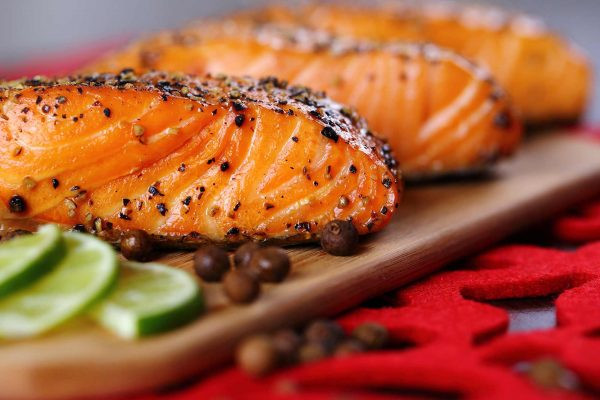
Ferguson Farms carries wild-caught sockeye salmon from Bristol Bay, Alaska — no color added, no antibiotics, no net-pen farming. Flash-frozen at sea immediately after harvest and shipped frozen directly to your door. The color on the package reflects what the fish actually ate. That is the whole story.
Shop Wild-Caught Sockeye Salmon →
Shop All Wild-Caught Seafood →
Frequently Asked Questions About Color Added Salmon
What does "color added" mean on salmon?
"Color added" on a salmon label means the fish was fed astaxanthin — a carotenoid pigment — as part of its formulated diet in order to produce or enhance the pink or red color of its flesh. Farmed salmon raised on commercial feed pellets does not develop the pink color of wild salmon naturally, so astaxanthin is added to the feed to replicate that color. The FDA requires this to be disclosed on the label.
Is color added salmon safe to eat?
Yes. Astaxanthin has been approved for use in salmon feed since the 1970s and is considered safe at commercial feed levels by both US and European food safety regulators. There is no documented evidence that consuming farmed salmon fed astaxanthin at normal commercial levels poses a health risk. The concern with "color added" is not food safety — it is transparency about how the fish was raised and what went into producing its color.
What is astaxanthin and where does it come from?
Astaxanthin is a naturally occurring carotenoid pigment found in algae, yeast, and the crustaceans that eat them — including the krill and shrimp that wild salmon eat. In commercial salmon farming, astaxanthin is added to feed either from natural sources like algae or from synthetic petrochemical-derived sources. Both trigger the same "color added" disclosure on the label. Natural astaxanthin is more expensive. Synthetic astaxanthin dominates commercial salmon feed production globally.
Does wild-caught salmon say "color added"?
No. Wild-caught salmon never requires a "color added" disclosure because no color is added. Wild salmon develop their pink-to-red color naturally from eating krill, shrimp, and other astaxanthin-rich crustaceans over their lifetime in the ocean. If you see "color added" on a salmon package, the fish is farmed.
How do I know if my salmon has synthetic or natural astaxanthin?
The label will not tell you — the "color added" disclosure does not specify the source. To find out, check the specific brand's published sourcing documentation or ask the seafood counter directly. Most commercial farmed salmon operations use synthetic astaxanthin because it is significantly less expensive than natural sources. Some premium operations use natural astaxanthin and specify this on their packaging or sourcing pages.
Is there salmon without "color added"?
Yes — wild-caught salmon. All wild Pacific salmon species — sockeye, coho, king, pink, and chum — develop their color naturally from their ocean diet and do not require added astaxanthin. If you want to avoid "color added" entirely, buy specifically labeled wild-caught salmon. "Atlantic salmon" sold in the United States is almost always farmed and will almost always carry a "color added" disclosure.
About the Author
Mike Ferguson is the founder and President of Ferguson Farms, a family-operated direct-to-consumer food company based in Plant City, Florida. Before building Ferguson Farms, Mike spent years in finance — which turned out to be useful preparation for understanding how the beef industry's pricing, consolidation, and supply chain economics actually work. Ferguson Farms raises and sources 100% grass-fed and grass-finished beef, pasture-raised soy-free chicken, and wild-caught seafood from trusted partners in Central Florida and beyond, shipping nationwide directly to customers' doors. No hormones, no antibiotics, no GMOs — and no grain-finishing. Mike writes about food sourcing, labeling transparency, and what it actually takes to know where your food comes from.
Read more on the Ferguson Farms Grass-Fed Truth Blog →
Related Reading: