How to Feed a Crowd on Game Day (Without Overbuying)
posted on
January 15, 2026
Feeding a crowd on game day sounds easy—until you’re staring at a grocery list trying to decide how much food is enough, what people will actually eat, and whether you’ll end up with leftovers no one wants. Overbuying wastes money. Underbuying creates stress. And too many menu ideas can turn hosting into work instead of fun.
The good news is that feeding a football crowd doesn’t require complicated planning. With a few smart decisions—made in the right order—you can build a game day menu that’s flexible, satisfying, and easy to execute.
Start With Crowd Size (Not Recipes)
One of the most common hosting mistakes is starting with recipes instead of people. When you lead with dishes—wings, sliders, tacos, chili—you end up buying a little bit of everything and hoping it balances out.
Instead, start with one question: How many people are you feeding? Once you answer that, portions and menu choices become simpler.
Simple crowd categories
- 6–10 people: standard watch party, family gathering, typical football weekend
- 12–20 people: bigger crowd, playoff hosting, “people will graze all day” event
Choose Foods That Scale Well
Not every “party food” holds up when you’re feeding a crowd. The best game day foods share a few traits: they’re easy to serve, easy to portion, familiar to most guests, and flexible enough to show up in more than one dish.
- Shareable: handheld or easy-to-grab foods people can eat while watching
- Portionable: you can estimate amounts without guessing
- Flexible: one protein can turn into multiple menu options
- Familiar: it fits the “football food” expectation
This is why chicken and ground beef are game day staples: they’re dependable, they scale, and they let you build a menu that feels intentional without being complicated.
One Protein, Multiple Uses (The Hosting Shortcut)
Variety doesn’t have to mean more ingredients. One of the easiest ways to keep hosting simple is to use the same protein in multiple formats throughout the game.
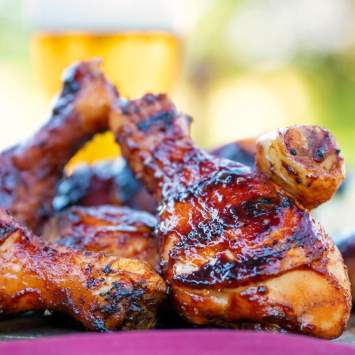
Think in “formats,” not recipes. Ground beef can become kickoff sliders, halftime tacos, and a warm tray of meatballs in the fourth quarter. Chicken can be seasoned once and served with different sauces so guests can choose their flavor without adding work for you.
Pro tip: If you’re feeding a bigger group, build “refill food” into your plan—items you can replenish quickly without stopping the party.
Avoid the “Too Many Options” Trap
It’s tempting to create a huge spread, especially for big games. But too many menu items often lead to smaller portions of everything, more prep time, and more cleanup. A focused menu almost always performs better than a crowded one.
- Choose a few crowd favorites and make sure portions are satisfying.
- Offer simple customization (toppings, sauces, seasonings) instead of extra dishes.
- Plan in waves (kickoff, halftime, late game) so food feels “fresh” without extra work.
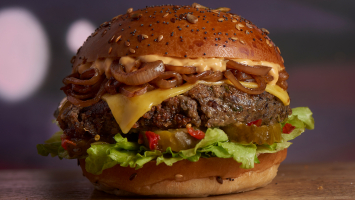
The Simplest Game Day Upgrade: Plan Like a Bundle
Once you’ve locked crowd size and core proteins, the last challenge is decision fatigue: comparing quantities, wondering if you bought enough, and trying to make sure everything fits together.
Thinking in complete game day solutions removes the guesswork. It’s the difference between building a menu one item at a time—and starting with a lineup that already makes sense for hosting.
Want the full system?
Explore our complete guide to game day food planning, crowd sizing, and hosting decisions: Game Day Food & Hosting Guide →
Final Checklist: A Plan You Can Execute
- Lock the crowd size (6–10 or 12–20).
- Choose 2–3 core proteins that scale and are easy to serve.
- Create variety through formats, not extra ingredients.
- Keep the menu focused so portions stay satisfying.
- Plan like a bundle to remove last-minute guesswork.
When you follow this approach, hosting feels lighter. You spend less time managing details and more time enjoying the game with the people you invited over in the first place.